
In Crain Currency: Why Family Offices Are Betting on Retention Over Recruitment
Founder Trish Botoff and Botoff Consulting’s 2025 data anchor a new look at retention, the structural pay premium, and the shift toward long-term alignment.
“Retention is not an HR cost to be minimized but a competitive necessity.”
Family office principals and leadership teams make compensation, retention, and incentive decisions in a market where operating-company benchmarks rarely fit. The talent pool is small, the governance is personal, and the trade-offs — between cash and incentive pay, alignment and flexibility, generosity and discipline — look quite different from those in a typical corporate setting. That's why Botoff Consulting's research has become a reference point for the people running family offices: our data is built specifically for this sector, drawn directly from family offices, and designed to support the strategic decisions principals and executives are actually making. This month, Founder Trish Botoff and Botoff Consulting's 2025 data were featured in Crain Currency's reporting on one of the sector's defining questions: how family offices are reorienting talent strategy around retention.
The Crain Currency feature, Why Family Offices Are Betting on Retention Over Recruitment, examines how family offices across the spectrum are coming to view keeping their people as the harder, more strategic work. As Trish quoted in the piece, retention is "not an HR cost to be minimized but a competitive necessity." With most family offices now requiring candidates to come with prior family office experience, the talent pool has tightened — intensifying competition for the people already inside the sector and raising the stakes on every departure.
That dynamic shows up in the numbers. Botoff Consulting's annual Compensation and Talent Planning Survey has tracked a persistent gap between family office salary increases and the national operating-company benchmarks published by WorldatWork. "Family offices in general provide much higher salary increases on an annual basis than what operating companies do," Trish told Crain Currency, "in part because family offices are smaller — they're not as focused on having to meet an operating budget." Salary increases spiked during the pandemic and have since moderated as the market tilted back toward employers, but the structural premium has held.
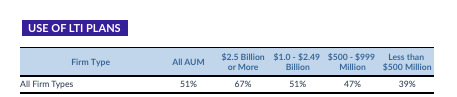
What's changing is the design of compensation itself. Family offices are moving past straight base salary adjustments and restructuring pay as a long-term alignment mechanism. According to the Botoff Consulting 2025 Compensation Premium Report, more than half of family offices (51%) now use long-term incentive plans, with significantly higher adoption among larger-AUM firms. Among offices that do offer LTI, deferred incentive compensation is the most common structure, followed by carried interest and co-investment opportunities (with and without leverage). A newer tool — what Trish describes as a "dedicated investment bonus" — gives junior staff exposure to family co-investments without the structural complexity of providing leverage through the use of loans: "It might be that your bonus is $100,000 and half is going to be in cash and half is being set aside for you to then invest alongside the family's investments. It's cleaner. It's not a loan."
Read the full feature in Crain Currency, Why Family Offices Are Betting on Retention Over Recruitment, and explore the data behind it in the Botoff Consulting 2025 Compensation Premium Report.